



Key Takeaways
- The minimum land requirement for a 5 TPD Bio CNG plant typically ranges from 2.5 to 3.5 acres.
- Feedstock type significantly impacts the land required for a 5 TPD Bio CNG plant design.
- A Bio CNG Plant Manufacturer should assess the entire site layout for successful land planning.
- Additional space should be considered for future expansions when selecting land for a Bio CNG plant.
- Expert guidance from a Bio CNG Plant Manufacturer in Gujarat can help ensure proper land use and planning.
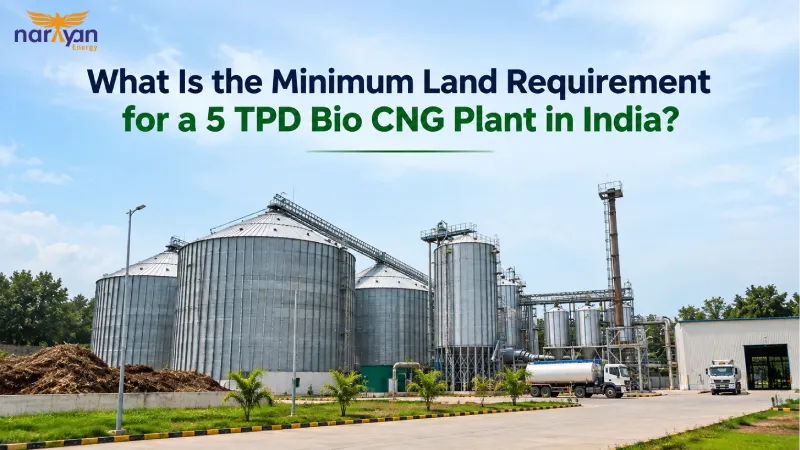
Shree Narayan Engineering Pvt. Ltd. is a leading manufacturer and supplier of Bio CNG Plant solutions. For a 5 TPD project, land planning is one of the first practical questions B2B buyers need to answer. There is no single fixed minimum applicable to every project because the footprint changes with feedstock, storage, process layout and site requirements. For planning purposes, published project estimates place a 5 TPD facility around 2.5 to 3.5 acres, while some compact designs may use less.
Is 2.5 Acres Enough for a 5 TPD Bio CNG Plant?
A 2.5-acre plot can be a useful starting point for a compact 5 TPD project, but it should not automatically be treated as the universal minimum. One published 5 TPD CBG project report specifies 2.5 acres for land and building, while another recent industry estimate places a standard 5 TPD plant in the 2.5–3.5 acre range.
The practical minimum depends on how efficiently the complete site is arranged, rather than the digester footprint alone. A Bio CNG Plant Manufacturer should therefore assess the complete process layout before confirming whether a particular plot is suitable.
What Takes Up Land in a 5 TPD Bio CNG Plant?
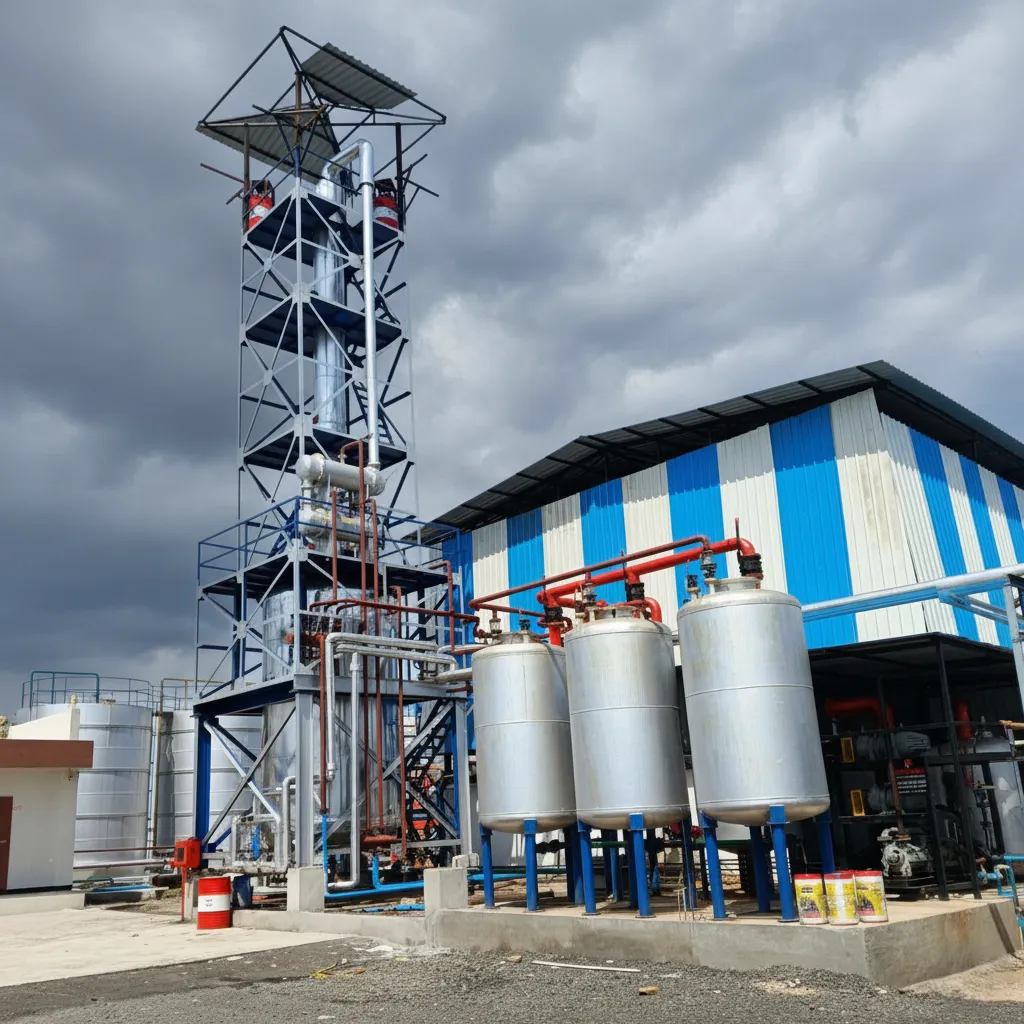
The plant itself is only one part of the overall land requirement. A 5 TPD project needs room for processing, movement, storage and supporting infrastructure.
Typical land-use areas include:
- Feedstock receiving and unloading area
- Feed preparation or pre-processing section
- Digester and associated process equipment
- Gas upgrading and compression area
- Digestate or manure handling area
- Internal roads and vehicle movement
- Utility and maintenance spaces
- Safety clearances and operational access
- Space for storage and future modification
This is why simply calculating the area occupied by the main equipment can give an incomplete picture. A Bio CNG Plant has to function as an integrated industrial site, with enough working space around major sections.
Why Feedstock Changes the Land Requirement
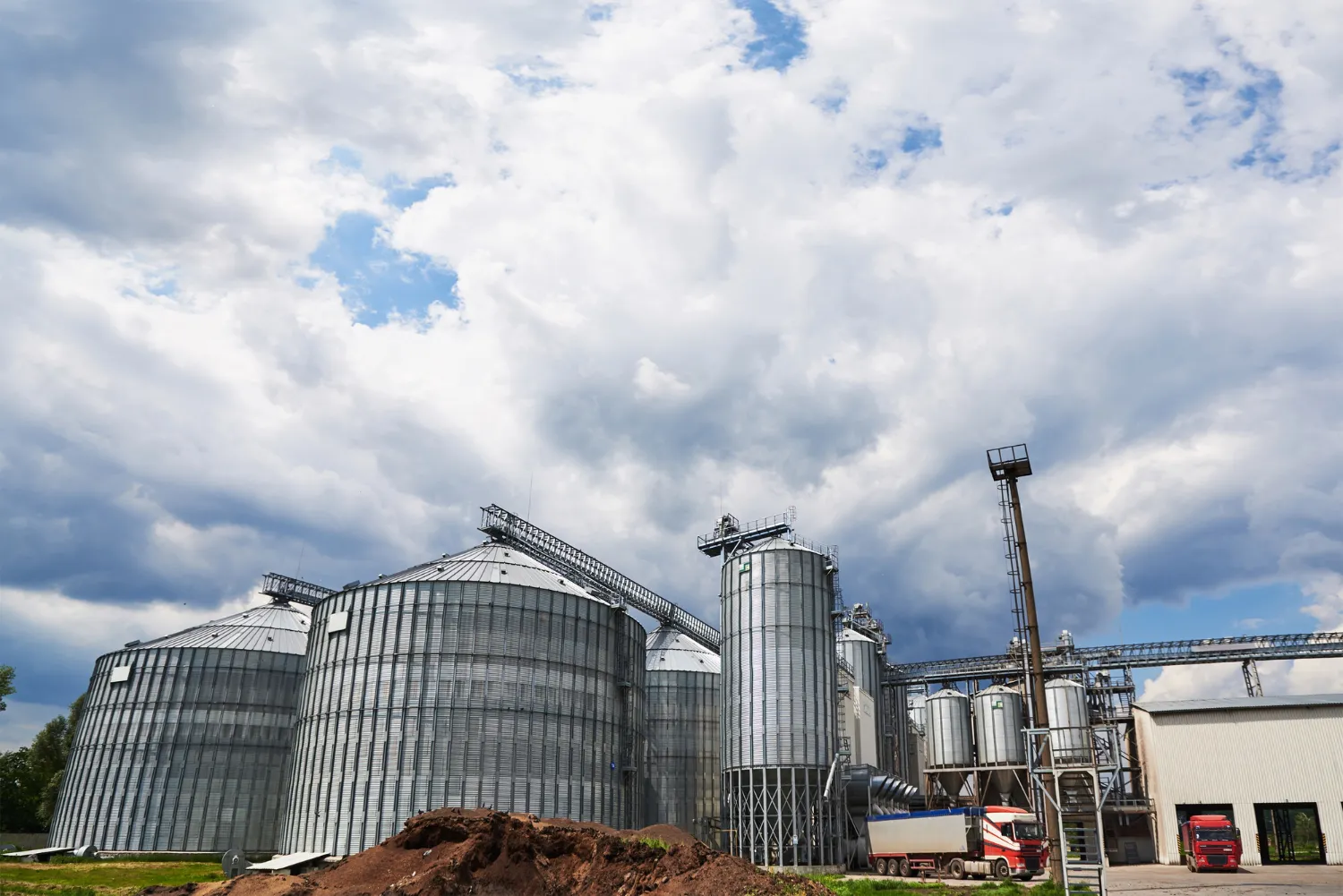
Feedstock has a direct influence on site planning. Different organic materials have different handling, storage and processing characteristics. A plant processing bulky agricultural residues can require substantially different storage arrangements from one using more concentrated or continuously available organic waste.
Recent CBG analysis also shows that feedstock requirements can differ considerably by material. For a 5 TPD production case, the cited study discusses different quantities for paddy straw, press mud, MSW and animal dung, which affects receiving and storage planning.
For this reason, a Bio CNG Plant Manufacturer in Gujarat should not recommend land size only from production capacity. The feedstock type, daily availability, storage strategy and pre-processing requirements also need to be considered.
5 TPD Bio CNG Plant: Compact Layout vs More Flexible Layout
The difference between a compact site and a more spacious site is mainly the amount of working room available for storage, vehicle movement and future requirements.
| Planning Factor | Compact Layout | More Flexible Layout |
|---|---|---|
| Land area | Around 2.5 acres may be possible | Around 3–3.5 acres or more |
| Equipment arrangement | Tighter | More operating space |
| Feedstock storage | More controlled | Greater storage flexibility |
| Vehicle movement | Requires careful planning | Easier circulation |
| Future expansion | Limited | More adaptable |
These figures are planning references, not a universal statutory minimum. A Bio CNG Plant Manufacturer should validate the actual requirement through a site-specific layout and project assessment.
What Should You Check Before Finalising the Land?
Before purchasing or leasing land, B2B buyers should verify whether the entire operating layout can fit comfortably. A smaller plot may appear sufficient until storage, vehicle access and supporting facilities are added.
- Check the total area available, not just the process section
- Confirm access for feedstock delivery vehicles
- Assess space required for receiving and storage
- Review the location of utilities and supporting systems
- Keep operational movement paths in the layout
- Consider whether future expansion may be required
- Get a site-specific layout before making a final land decision
For projects in Gujarat, working with an experienced Bio CNG Plant Manufacturer in Gujarat can help buyers evaluate the proposed plot according to the planned process configuration rather than relying on a generic acreage figure.
Does a 5 TPD Bio CNG Plant Need Extra Land for Future Expansion?
Future expansion is an important consideration when selecting a site. If the available land is only enough for the initial equipment, later modifications can become difficult.
Planning additional space does not mean that every 5 TPD project must purchase a much larger parcel. It means the layout should account for practical future requirements where expansion is part of the business plan.
Industry guidance for larger municipal CBG facilities has also highlighted the importance of reserving additional land for future capacity expansion.
A Bio CNG Plant designed around a well-planned site can therefore provide more flexibility for operational changes than a project placed on a tightly constrained plot.
Why Choose Us
Shree Narayan Engineering Pvt. Ltd. focuses on practical plant planning based on the actual project requirement. As an experienced Bio CNG Plant Manufacturer in Gujarat, we understand that land selection cannot be separated from feedstock handling, process configuration, storage and site movement. Our approach is to consider the complete plant layout before recommending the space required, helping B2B buyers make a more informed decision about a 5 TPD project.
Conclusion
So, what is the minimum land requirement for a 5 TPD Bio CNG plant in India? There is no single number that can be applied to every project. Published estimates indicate that around 2.5 acres can be used for a compact project, while approximately 2.5 to 3.5 acres is a more practical planning range for a standard 5 TPD facility. The final requirement depends on feedstock, storage, process arrangement, vehicle movement and future expansion plans. For an accurate site decision, buyers should obtain a detailed layout from a Bio CNG Plant Manufacturer before finalising the land.
Planning a 5 TPD Bio CNG Plant and need help assessing your available land? Speak with Shree Narayan Engineering Pvt. Ltd. for project-specific guidance.